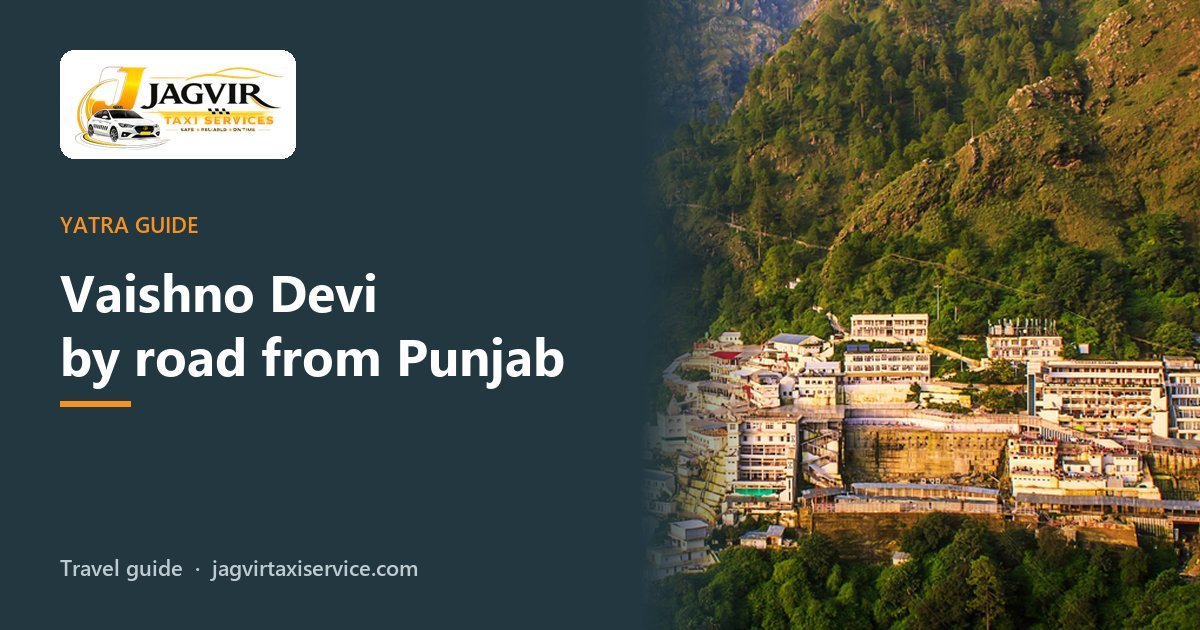
Planning the Vaishno Devi yatra by road from Punjab? The route to Katra, RFID card registration, trek options, best seasons, night halts and a packing checklist.
From Jalandhar, Katra is about 260 km by road, roughly 5 to 6 hours via Pathankot, Kathua and Jammu. Most Punjab families do the yatra in three days: drive up on day one, trek to the Bhawan and back on day two, and return home on day three. Register for the RFID yatra card before you start the climb, and plan the trek around who is in your group.
That is the outline. The details below come from the questions families ask us most when they plan the Mata Vaishno Devi yatra by road from Punjab.
The road from Punjab to Katra
From Jalandhar the route heads north through Bhogpur, Dasuya and Mukerian to Pathankot. Beyond Pathankot you cross into Jammu and Kashmir at Lakhanpur, then continue through Kathua and Samba to Jammu, and from Jammu climb the last stretch to Katra in the foothills.
The plains section up to Pathankot is quick. Past Jammu the road becomes hillier and slower, with more trucks and pilgrim buses. Families from Amritsar and Gurdaspur join the same road at Pathankot, while those from Ludhiana and Phagwara simply start further south on NH44 and come up through Jalandhar.
When to leave
An early-morning start, around 5 or 6 am, gets you to Katra by early afternoon with time to rest, collect the yatra card and eat before the climb. Leaving after lunch means arriving in Katra in the evening, which suits groups who want to trek through the night. In winter, fog in the Punjab plains can slow the first two or three hours, so leave a little earlier and do not set a tight arrival time.
Train or taxi?
Trains run from Jalandhar Cantt towards Jammu Tawi and Katra, and for a couple travelling light they are a perfectly good option; check the current timetable on IRCTC. A taxi makes more sense for families with elderly parents, small children or lots of luggage, for groups who want to stop at gurdwaras and dhabas on the way, and for anyone who wants a car waiting in Katra for the return without depending on train availability during peak seasons.
The RFID yatra card
Every pilgrim needs an RFID yatra card to go on the trek. It is checked at the start of the track near Banganga, and you cannot proceed without it. The registration process changes from time to time, so confirm the current steps on the official Shri Mata Vaishno Devi Shrine Board website.
- Register online on the Shrine Board website before you leave, then collect the physical card in Katra, or
- Register at the yatra registration counters in Katra on the day you arrive.
- Carry an original photo ID for every pilgrim. Each person is photographed at the counter.
- The card is valid only for a limited time after it is issued, so do not collect it a day early and plan to start much later.
During peak times the counters get long queues. Pre-registering online saves time, but you still need to collect the card in person.
The trek from Katra to the Bhawan
The Bhawan is about 12 to 13 km from Katra one way, climbing steadily the whole time. The track is paved, lit through the night and lined with tea stalls, rest shelters, toilets and medical points. Halfway up, Ardhkuwari has a cave shrine of its own, and many pilgrims rest there.
Fit adults usually take somewhere between five and eight hours to go up, depending on pace, crowds and stops. Coming down is faster but harder on the knees. Many pilgrims also continue to the Bhairon temple above the Bhawan after darshan, which adds more climbing; there is a ropeway for part of that, so check whether it is running.
Ways up besides walking
- Ponies are available from Katra for those who cannot walk the whole way.
- Palki (palanquin) and pithoo services carry people or children.
- Battery cars run on part of the route, on the newer track between Ardhkuwari and the Bhawan.
- Helicopter services fly from Katra to Sanjichhat, leaving a shorter walk of a few kilometres to the Bhawan.
Availability, booking methods and eligibility rules for these services change, and helicopter seats and battery car slots get booked out in busy periods. Check the current options on the Shrine Board website before you leave Punjab, not after you reach Katra.
Best time of year to go
| Period | What to expect |
|---|---|
| March to June | Pleasant to warm. School holidays in May and June bring heavy crowds; book hotels early. |
| July to September | Monsoon. The track can be slippery, landslides occasionally disrupt the road and helicopters may not fly in bad weather. Fewer crowds. |
| Navratri (spring and autumn) | Very crowded, with a festive atmosphere. Long queues for darshan and registration. |
| October to November | Clear, cool weather and moderate crowds. Many families consider this the easiest season. |
| December to February | Cold, especially at night near the Bhawan, with occasional snow higher up. Fog on the Punjab roads in the mornings. Quieter overall, except around New Year. |
Weekends are busier than weekdays all year. If your dates are flexible, a weekday departure from Punjab is noticeably calmer.
Planning the night halt
Where you sleep shapes the whole trip. There are three common patterns.
- Arrive, rest, trek next morning. Reach Katra in the afternoon, sleep in a hotel, start the climb at dawn and come down by evening. The easiest plan for families with children or older members.
- Trek through the night. Arrive in the evening, collect the card and start walking after dinner, reaching the Bhawan in the early hours when it is often less crowded. Popular with younger groups; tiring for everyone else.
- Stay up top. The Shrine Board runs accommodation near the Bhawan and at points on the route. It needs booking in advance and is in high demand.
Whichever you pick, book a hotel in Katra for at least one night after the trek. Coming down tired and then driving 5 to 6 hours to Punjab the same night is the plan we most often talk families out of.
Round-trip taxi planning
On a round trip booked with Jagvir Taxi Service, the car stays with you in Katra while you are on the trek, so you have transport for the hotel, the registration counter and the return. A few things to sort out when booking:
- Number of days. A three-day trip is the norm from Jalandhar; four days if you add Jammu sightseeing or a slower pace for elderly pilgrims.
- Driver's stay. The driver needs a place to sleep and eat in Katra; this is discussed when you book.
- Permits and tolls. A Punjab taxi entering Jammu and Kashmir needs the relevant state permit, and there are tolls on the way. These are confirmed with the quote at booking so there are no surprises at Lakhanpur.
- Car size. A sedan for up to four people with light bags; an Innova or Innova Crysta for six or seven, or for families carrying blankets and woollens in winter; a Tempo Traveller for larger family groups.
Some families combine the yatra with other stops, coming back via Amritsar for the Golden Temple, or heading to an airport for an NRI relative's flight. That works well as long as you build in a rest day after the trek.
Advice for elderly pilgrims
For many families, the yatra is planned around a parent or grandparent who has wanted to go for years. A few things help:
- Get a basic medical check before the trip if they have heart, breathing or knee problems, and carry their medicines in the day bag, not the hotel room.
- Do not plan to walk the full distance if they are unsure. Book a pony, palki, battery car or helicopter in advance where possible.
- Avoid the night trek. A good sleep in Katra and a morning start make a big difference.
- Break the drive from Punjab with a proper stop. Five to six hours in the car the day before a long climb is a lot.
- Keep the group together and save everyone's phone numbers; the track gets crowded and it is easy to get separated.
Packing checklist
- Original photo ID for every pilgrim, plus a photocopy
- Comfortable walking shoes with good grip, already broken in
- A light jacket in summer; warm layers, cap and gloves from November to February
- Rain poncho or umbrella, especially from July to September
- Water bottle and a few dry snacks
- Personal medicines, a small first-aid kit and any knee support you use
- Small torch or phone power bank
- A light day bag; leave heavy luggage in the hotel or car
- Some cash for tea stalls and small purchases on the track
- Chunni or scarf for covering the head during darshan
Phones, cameras and leather items have restrictions near the Bhawan, and there are lockers for depositing belongings. Check the current rules on the Shrine Board website so you know what to leave behind.
Related routes and booking
Our Jalandhar to Katra taxi page has more on that specific route. If you are flying out after the yatra, there are cars from Jammu to Amritsar airport and from Jammu to Delhi airport. Families from the north of Punjab can also see the Pathankot to Delhi NCR route. Planning more than one trip this season? Look at hill trips into Himachal, our one-way taxi from Jalandhar, or the service for visiting NRI families.
To book, call or WhatsApp Jagvir Taxi Service on +91 72680 42000, or send your details through the contact page. Share your travel dates, number of pilgrims, any elderly members and whether you want a one-way drop or a round trip. We will suggest a leaving time and the right car, and confirm permits, tolls and the quote before you set off.
Frequently asked questions
How long does it take to reach Katra from Jalandhar by taxi?
Katra is about 260 km from Jalandhar, roughly 5 to 6 hours via Pathankot, Kathua and Jammu. Allow more in winter fog or on busy holiday weekends.
Is the RFID yatra card compulsory for Vaishno Devi?
Yes, every pilgrim needs one to start the trek. You can register online on the Shrine Board website and collect the card in Katra, or register at the counters in Katra with an original photo ID.
How long is the walk from Katra to the Bhawan?
About 12 to 13 km one way, uphill. Fit adults usually take five to eight hours to go up, depending on crowds and stops.
What options are there for elderly pilgrims who cannot walk the full trek?
Ponies, palki, battery cars on part of the route and helicopters from Katra to Sanjichhat are generally available. Availability and booking rules change, so check the Shrine Board website before travelling.
How many days should we plan for Vaishno Devi from Punjab?
Three days suits most families: drive to Katra on day one, trek on day two, and return on day three. Add a day for elderly pilgrims or extra sightseeing.
Does the taxi wait in Katra during the yatra?
On a round trip, yes. The car stays in Katra while you trek, and the driver's stay, the J&K permit and tolls are confirmed when you book.